At Salamander we strive to ensure that we always invest in our staff, as they are heavily at the heart of the business. We make sure that our employees not only have the skills they need to do the job, but also that they have interpersonal skills which mean they are able to work coherently as a part of a team. Recently we have welcomed to the team two new exceptional staff members who we already know will be a credit to themselves and the company.
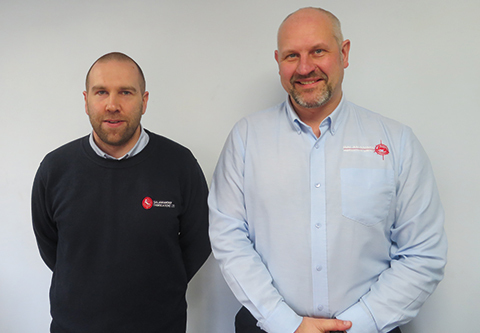
Name: Anthony Hunter (above left)
Position: 3D CAD
20 years sheet metal knowledge with 10 years in 3D design.
Anthony has been a great addition to the CAD team here at Salamander. Enabling us to quickly design from a customer’s concept all the way through to the manufacture. Whilst designing with consistency and at a high skill level, Anthony will always ensure the most time and cost-effective route is the end throughput. This new appointment for the business has enabled us to react to customers enquiries must quicker. Anthony said ” I like working at Salamander because of the focused environment within the technical department. I have joined a team with a wealth of knowledge. I also like the variety of different projects which I get involved with. No day is ever the same.”
Anthony likes playing golf, supporting the local Premiership football team Huddersfield Town and playing 5 a side as well as a keen interest in watching British super bikes.
Name: Dave Hammond (above right)
Position: Sales Account Manager
32 years sheet metal knowledge
Dave has enabled us to react to quickly customer’s requirements for quotation and is able to quote quickly because of his in-depth knowledge of how something is manufactured or fabricated.
Dave has been a great addition to the team bringing new business to Salamander as well as developing a further relationship with current customers. Dave is currently working towards EngTech status. Talking about his new role, Dave said “Salamander is a family run business with a friendly working atmosphere. I like the fact that the skill set at Salamander is high, enabling us to come up with clever solutions to customers requirements.” Dave lives in Honley, a nearby local village to Salamander and likes to cycle in to work to keep fit as well as taking his dog for walks.
We are always looking for new and interesting talent here at Salamander, if you are interested in working for us please don’t hesitate to get in touch – you might be the next best thing for our growing, family-run business.
Sheet metal fabrication is vital for many industries, from construction to aerospace, automotive, and beyond. It’s a refined manufacturing process that is responsible for a great number of products that you see every day.
Metal fabrication has been around for centuries, but it continues to evolve with technological advancements. From creating precision parts for machinery to metal structures for buildings and bridges, its use cases are in even more areas than you’d think.
In this guide, we’ll cover:
What sheet metal fabrication is
How the process works
Different types of sheet metal & the applications
Benefits of sheet metal fabrication
So, let’s explore and, as always, if you have questions or are interested in what we do, we at Salamander have over 50 years’ experience in sheet metal fabrication services to support your next project.
Special tools, such as band saws and chops saws, can also be used in the sheet metal fabrication process. These ensure even cutting throughout the process. Cutting torches are capable of cutting large sections of sheet metal with minimal effort.
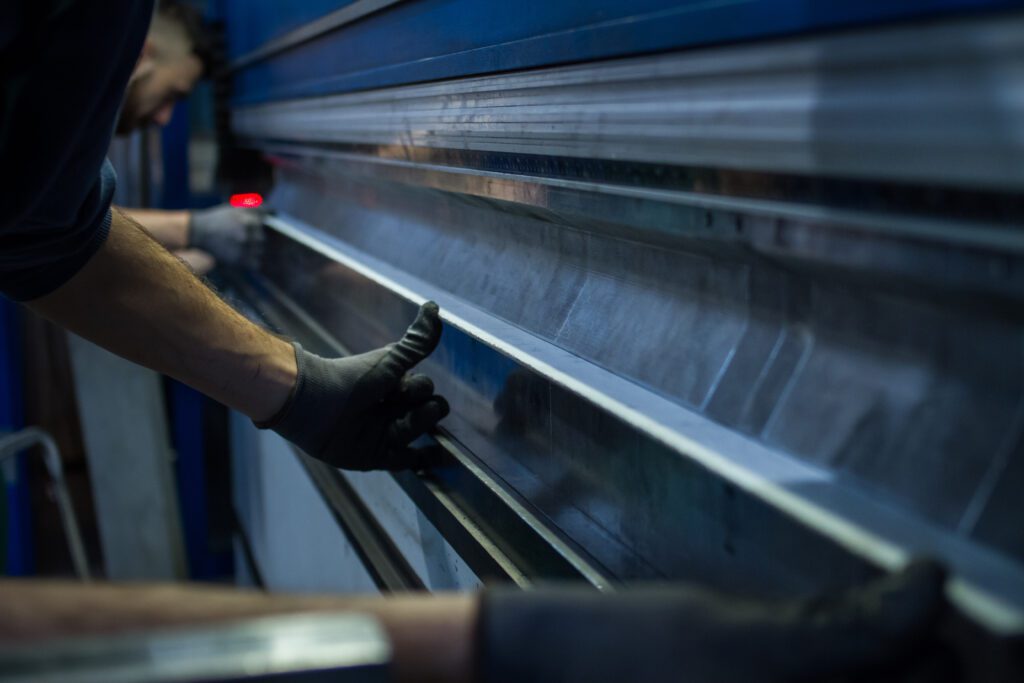
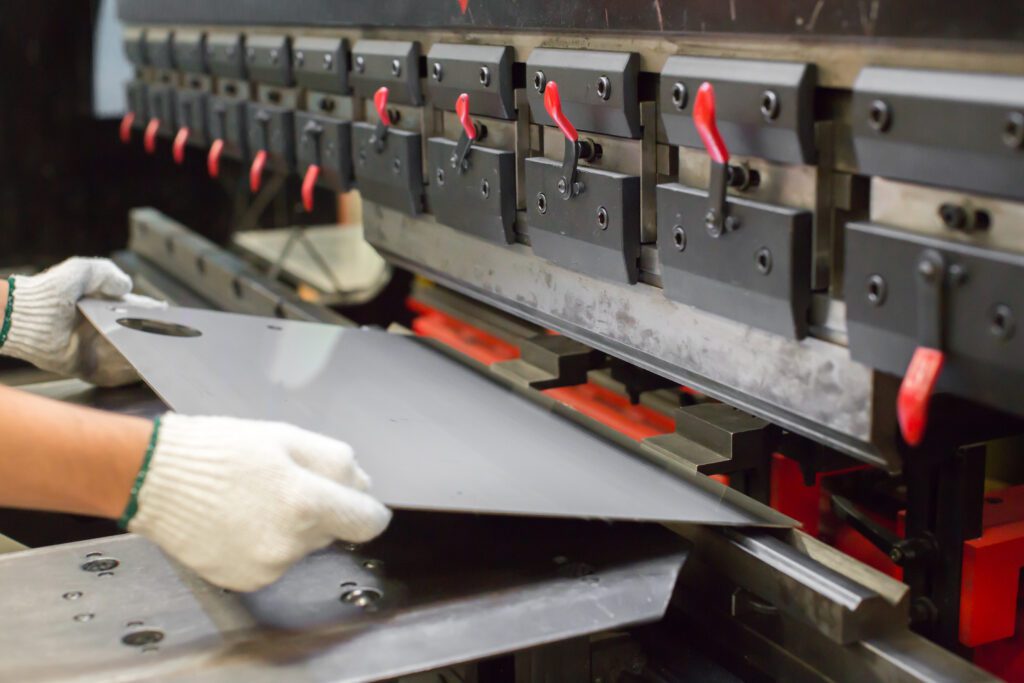
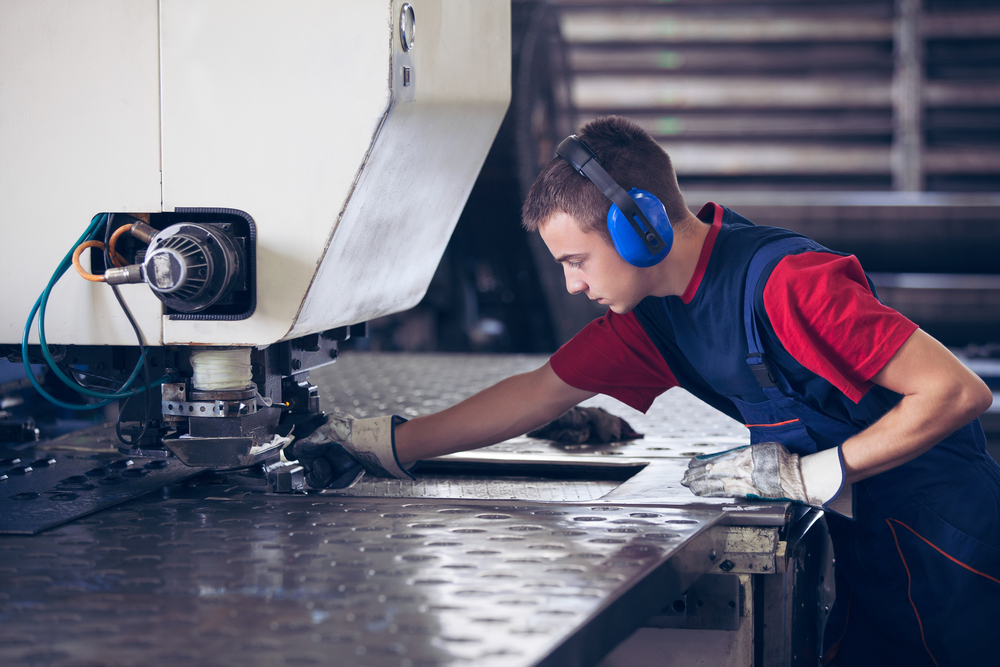
Sheet metal fabrications use press brakes, which ease the process of sheet metal fabrication, by helping to create sharp bends and angles within the metal. There are a variety of different press brakes, which have different functions and are used for different purposes.
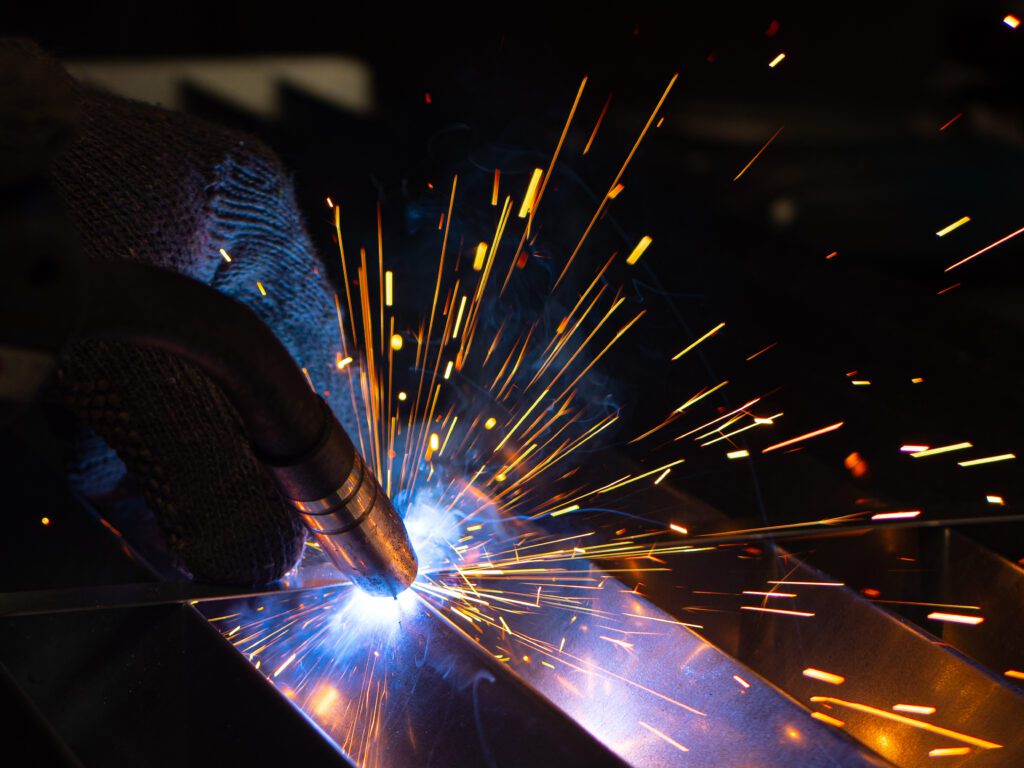
One of the other main factors in sheet metal fabrication is welding. Once all the components are formed, they are then assembled and tack welded into position. Many welding techniques can be used in sheet metal fabrication in order to prevent warping or any other abnormalities. These techniques include covering the metal with sand during the cooling process, special straightening process, welding in a staggered manner and using a stout fixture.
Straightening defected metal can be achieved by using with an oxy-acetylene torch. Heat is applied to the metal in a slow manner to remove any abnormalities.
The metal is usually finished by being sandblasted, primed and painted. This then ensures the metal looks fantastic and then is ready to be sent to the client.
If you have an upcoming project or want more details about we can do for you, don’t hesitate to get in touch.
How the Sheet Metal Fabrication Process Works
Metal fabrication tends to start from processing raw materials, which are often large and thick – for example, steel, aluminium and copper. Sheet metal can be cut, bent or stretched into most desired shapes.
Here are the typical steps for how it works:
Design
The design stage is where the groundwork for the project is laid out. Designers will usually create initial sketches or 2D/3D models of the product, which may be done using computer-aided design (CAD) software or by hand.
Important factors such as the intended use of the product, the required dimensions and tolerances, and any specific materials or finishes that will be needed are mapped out before the manufacturing begins.
The bending process is known as CNC folding and is a practice that can be completed using a variety of machines. For example, a manual press brake or automated panel bending machine.
The machine forms the metal part by clamping the sheet metal and applying pressure to maintain the desired curvature.
Forming
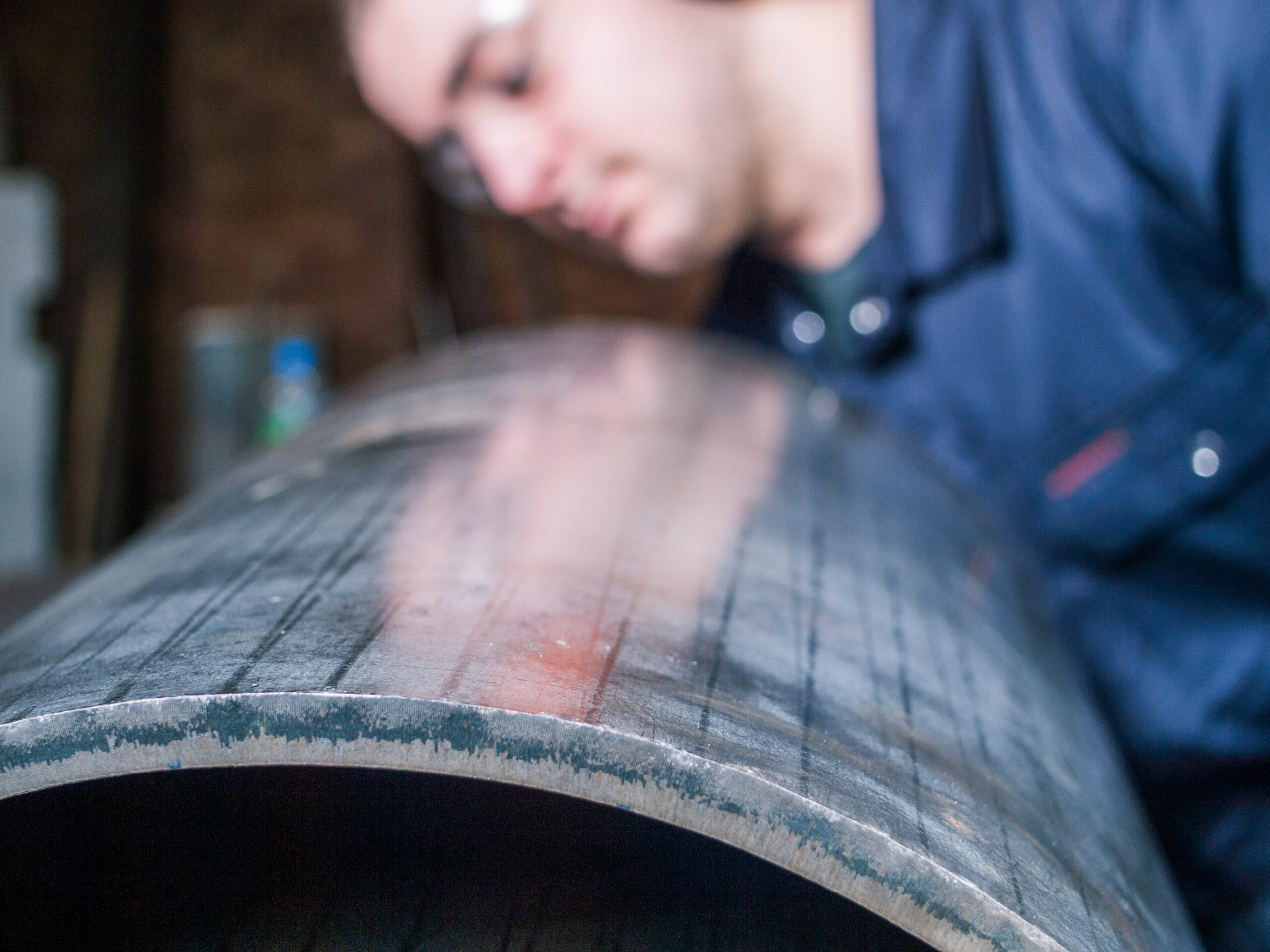
The forming process bends or deforms the material into the required shape. Different from cutting, which subtracts the material, forming actually reshapes the material without decreasing any of its mass.
Metal inert gas (MIG) welding: A typically fast welding option that is better for thicker materials.
Tungsten inert gas (TIG) welding: Offers greater control and precision than MIG. Best for thinner materials. You may also see it referred to as gas tungsten arc welding (GTAW).
Robotic MIG welding: This is an automated version of more traditional MIG welding.
Spot welding: This follows an electrical resistance welding process.
Finishing
Finishing is the last step when preparing metal products for use and makes products more resistant to corrosion, adding another layer of durability. It also helps make the surfaces look appealing.
In a sheet metal fabrication project, assembly refers to the assembling of the required products before they are packaged and delivered to where they need to be.
At Salamander, we can act as a subcontractor to provide individual parts or carry out full-service electro mechanical assembly to bring you a complete ‘end product’.
Major Types of Sheet Metal
Aluminium: Used for automotive parts, electrical devices, and cooking vessels. Offering numerous benefits including a good strength-to-weight ratio, and high conductivity.
Aluminised steel: This metal combines the high strength of carbon steel with aluminium’s superior corrosion resistance. Sheets of aluminised steel are used for products intended for high-temperature environments, such as kitchen appliances.
Carbon steel: Carbon steel is used in the industrial and consumer markets for a range of products. It is a steel alloy that contains carbon, resulting in the material increasing in hardness and strength when it undergoes heat treatment.
Copper: Examples of products made from copper are sinks, roofs, rain gutters, and doors. Copper features higher electrical and thermal conductivity in comparison to aluminium but can be more expensive.
Galvanised steel: Sheets of galvanised steel tend to be used for making automobile bodies, water pipes, fences, roofs, and staircases. It is made by coating steel with zinc through a hot dipping process, helping to make it more corrosion-resistant.
High-strength steel: Military armour plates tend to be made from sheets of high-strength steel. The material is produced by alloying steel with a range of elements such as carbon, manganese, and copper. This helps to improve its hardness.
Stainless steel: Used for kitchen vessels, storage tanks for chemicals and food processing machinery. Stainless steel offers superior corrosion resistance, fire and heat resistance, strength-to-weight ratio, and manufacturability.
Titanium: Typical products made from titanium include aviation parts, medical equipment, and construction elements. It is primarily used for its high strength-to-weight ratio and corrosion resistance. It is also recyclable.
Let’s take a closer look at its variety of common use cases.
Kiosks, vending machines & enclosures
Vending machines and kiosks bring in significant revenue for many customer-facing companies – for example, gyms and leisure centres. This is why care needs to be taken in their construction.
There are a large number of individual components needed to go into building these types of machines, which is why they require the application of sheet metal fabrication.
Construction & Security
The construction and security sectors use the application of sheet metal fabrication for products such as security doors, guard rails, security grills and bespoke security enclosures.
Sheet metal fabrication can help create a wide range of retail display units for different retail clients, retail spaces and shop displays. For example, bar displays, retail display cubes, portable displays and point-of-sale stands. These products need to be eye-catching and highly functional.
Science, medical & food
Particularly the scientific, medical and food industries utilise sheet metal fabrication to create products found in commercial and industrial kitchens such as worktop surfaces, storage units, and sinks.
Stainless steel tends to be the material of choice for many applications in the food production and preparation industries.
Transportation
The transportation sector uses thousands of different products made using metal fabrication. For example, emergency vehicles rely on sheet metal fabrication for the construction of products such as glove-box enclosures, side steps, door-handle mounts, and steel surrounds for tail-lift doors.
Sheet metal fabrication is an excellent method for creating parts both large and small that can go into vehicle construction. On top of that, safety rails on building sites, ladder hatch trap doors, and stair-safe products are constructed through sheet metal fabrication.
Benefits of Metal Fabrication
Sheet metal fabrication offers many benefits, but the three main benefits are:
Strong & Durable: When looked after well, metal fabrications can last many years without needing to be replaced, making them great for projects that require long-term durability.
Versatile: It can be used for a wide range of different-sized projects, making them a valuable asset for many businesses as well as for individuals.
Easily maintained: Metal fabrications are not susceptible to rust or corrosion and are resistant to fire and heat, making the process great for industrial and commercial settings.
The Go-To Choice for Sheet Metal Fabrication
We are a full-service sheet metal fabrication company that works with organisations all over the country to create high-quality fabricated metal products with an exceptional customer experience.
We pride ourselves on our ability to offer both end-to-end sheet metal fabrication and sub-contracting services. We have been the UK’s chosen choice for sheet metal fabrication solutions for over 50 years, and our plan is to keep it that way with guaranteed quality every time!
To learn more about the work we do or to get started with your next project, please don’t hesitate to get in touch with our friendly sales team on 01484 843599 or at sales@salamanderfabs.com.
We use cookies to ensure that we give you the best experience on our website. If you continue to use this site we will assume that you are happy with it.